5 Best Woven Slide Sandal Upper Constructions
A five-option sourcing guide for fashion, resort, and artisan-positioned brands. It turns woven slide sandals demand into construction, specification, quality, cost, and RFQ decisions without treating “best” as an unsupported universal claim.
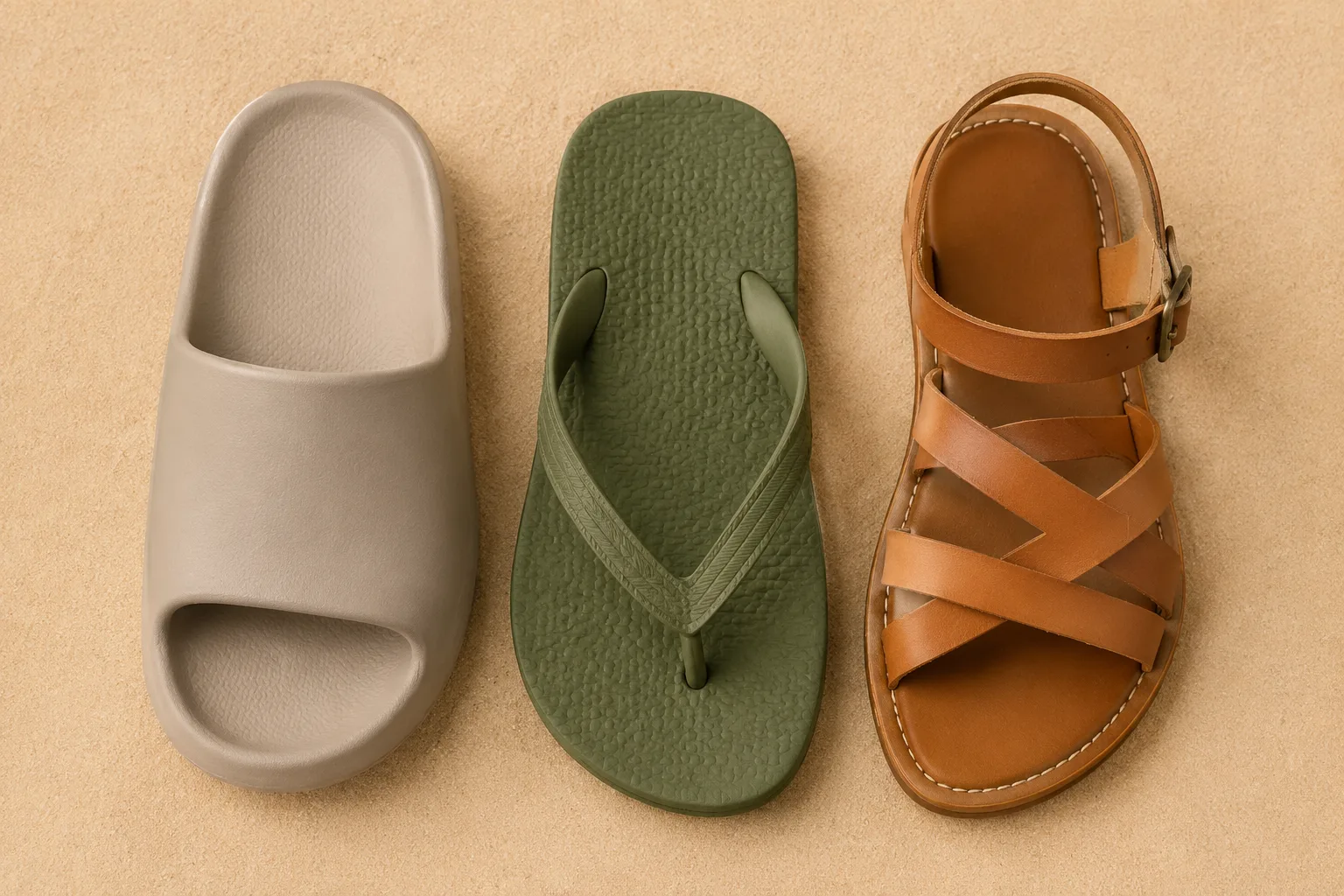
How to use this Woven Slide Upper Constructions comparison
5 best woven slide sandal upper constructions is a buyer decision framework, not a claim that one construction is universally superior. The phrase woven slide sandals signals commercial comparison demand, but a private-label buyer still has to define the market, price position, expected wear, size range, materials, branding, packaging, and order quantity. For fashion, resort, and artisan-positioned brands, the central decision is woven texture supported by controlled stretch, reinforcement, and clean edges. Compare the five routes below against the same cost, sample, fit, delivery, and quality assumptions.
5 Best Woven Slide Sandal Upper Constructions
Each option can work when it matches the intended use and specification. The best route is the one a factory can sample, measure, reproduce, and inspect consistently at the required quantity. The principal risk is snagging, stretch growth, frayed edges, and uneven tension. Use these five options as an RFQ shortlist, and require suppliers to identify substitutions and trade-offs instead of returning one unexplained price.
- 1. Wide woven vamp — Best for distributed instep pressure and visible texture. For woven texture supported by controlled stretch, reinforcement, and clean edges, define weave material, backing, edge finish, vamp shape, and attachment in the sample brief. The main trade-off is stretch, snagging, backing, edges, and weave tension. Inspect snag, stretch, pull strength, symmetry, and abrasion against the signed confirmation sample.
- 2. Padded textile strap — Best for soft step-in feel for casual or recovery products. For woven texture supported by controlled stretch, reinforcement, and clean edges, define weave material, backing, edge finish, vamp shape, and attachment in the sample brief. The main trade-off is water retention, compression, seams, drying, and rub. Inspect snag, stretch, pull strength, symmetry, and abrasion against the signed confirmation sample.
- 3. Leather or suede wrapped upper — Best for premium surface over a scalable molded base. For woven texture supported by controlled stretch, reinforcement, and clean edges, define weave material, backing, edge finish, vamp shape, and attachment in the sample brief. The main trade-off is transfer, spotting, nap or grain match, and packing marks. Inspect snag, stretch, pull strength, symmetry, and abrasion against the signed confirmation sample.
- 4. Synthetic leather molded strap — Best for embossing, print, and repeatable color. For woven texture supported by controlled stretch, reinforcement, and clean edges, define weave material, backing, edge finish, vamp shape, and attachment in the sample brief. The main trade-off is flex cracking, hydrolysis, peel, and edge finish. Inspect snag, stretch, pull strength, symmetry, and abrasion against the signed confirmation sample.
- 5. Adjustable buckle or hook-and-loop upper — Best for broader fit range and visible function. For woven texture supported by controlled stretch, reinforcement, and clean edges, define weave material, backing, edge finish, vamp shape, and attachment in the sample brief. The main trade-off is hardware or fastener cycling, corrosion, pull, and alignment. Inspect snag, stretch, pull strength, symmetry, and abrasion against the signed confirmation sample.
Score the five options on the same buying criteria
Do not compare a premium sample from one supplier with an opening-price sample from another. Give every factory the same target and score the responses on evidence. For woven slide upper constructions, the specification priority is weave material, backing, edge finish, vamp shape, and attachment, while the quality priority is snag, stretch, pull strength, symmetry, and abrasion. Weight the scorecard for the actual sales channel: fashion may prioritize finish and delivery, comfort may prioritize fit and recovery, and wet-use products may prioritize retention, drying, and traction.
- Product fit
- Use case, target customer, size range, expected wear, and retail position
- Repeatability
- Material references, measurable dimensions, tolerances, and signed sample controls
- Quality risk
- snagging, stretch growth, frayed edges, and uneven tension
- Commercial fit
- MOQ, tooling, sample revisions, labor, packaging, lead time, and landed-cost effect
- Evidence
- Material records, test methods, in-line checks, final inspection, and retained samples
What the specification must define before sampling
A reference image is not a production specification. Convert the selected route into a bill of materials, measurement chart, construction drawing, color standard, logo file, packaging instruction, and inspection checklist. State whether alternatives are allowed and require every deviation on the quotation. Be especially precise about weave material, backing, edge finish, vamp shape, and attachment. Approve the smallest, middle, and largest relevant sizes when grading can change hold, contour, balance, or visual proportion.
- Target market, selling channel, retail position, and intended use
- Product-specific specification: weave material, backing, edge finish, vamp shape, and attachment
- Quantity by style, color, and size plus expected reorder scale
- Logo, labeling, barcode, retail packaging, and export-carton requirements
- Delivery date, destination, Incoterm, test methods, and inspection level
Quality checks that make the list useful for sourcing
Best, comfortable, premium, waterproof, handmade, and Italian-style are not inspection standards. Translate each claim into a material record, tolerance, test, or approved appearance range. The recurring risk is snagging, stretch growth, frayed edges, and uneven tension; the inspection focus is snag, stretch, pull strength, symmetry, and abrasion. Keep a signed confirmation sample and sealed material or color references. Run incoming and in-line checks before final AQL inspection. Publish origin, composition, sustainability, comfort, and performance statements only when evidence is available.
- Confirm snag, stretch, pull strength, symmetry, and abrasion
- Measure boundary sizes and compare left-right pair consistency
- Record material lot, color reference, component supplier, and approved substitutions
- Test function after conditioning, flexing, aging, water, or abrasion as relevant
- Inspect packaging, labels, assortments, shipping marks, and carton counts
SEMrush terminology assigned to this buyer guide
These exact phrases come from the supplied SEMrush US exports and are assigned only to this URL. They are visible so the page explains the terminology instead of hiding it in metadata. Similar word orders should resolve to the approved construction, audience, color, or use-case specification.
- huarache slide sandals — Route the phrase to one controlled construction, bill of materials, size specification, approved sample, and inspection checklist.
- woven slide sandals — Route the phrase to one controlled construction, bill of materials, size specification, approved sample, and inspection checklist.
RFQ checklist for comparing the top five routes
Ask suppliers to quote the same option or clearly explain a recommended alternative. Separate tooling, artwork, molds, and samples from repeat per-pair pricing. Request a timeline covering material confirmation, first sample, revisions, size-set or wear testing, production, inspection, and freight handoff. A useful response should address weave material, backing, edge finish, vamp shape, and attachment, provide a control plan for snag, stretch, pull strength, symmetry, and abrasion, and identify evidence behind material, origin, comfort, or performance claims.
- Reference image or drawing plus the selected construction route
- Material, color, size, branding, packaging, and destination requirements
- Sample fee, tooling, revision allowance, and approval sequence
- MOQ, price basis, lead time, inspection, replacement, and claim documentation
- Named alternatives with cost, performance, appearance, and lead-time trade-offs