Private Label Sandals
Private Label Slides: Frame the Brief Around the Buyer Context
The intended sales or use context helps define a private label slide inquiry. Organize the brief around the buyer type, available references, market, quantity, product direction, and open commercial questions.
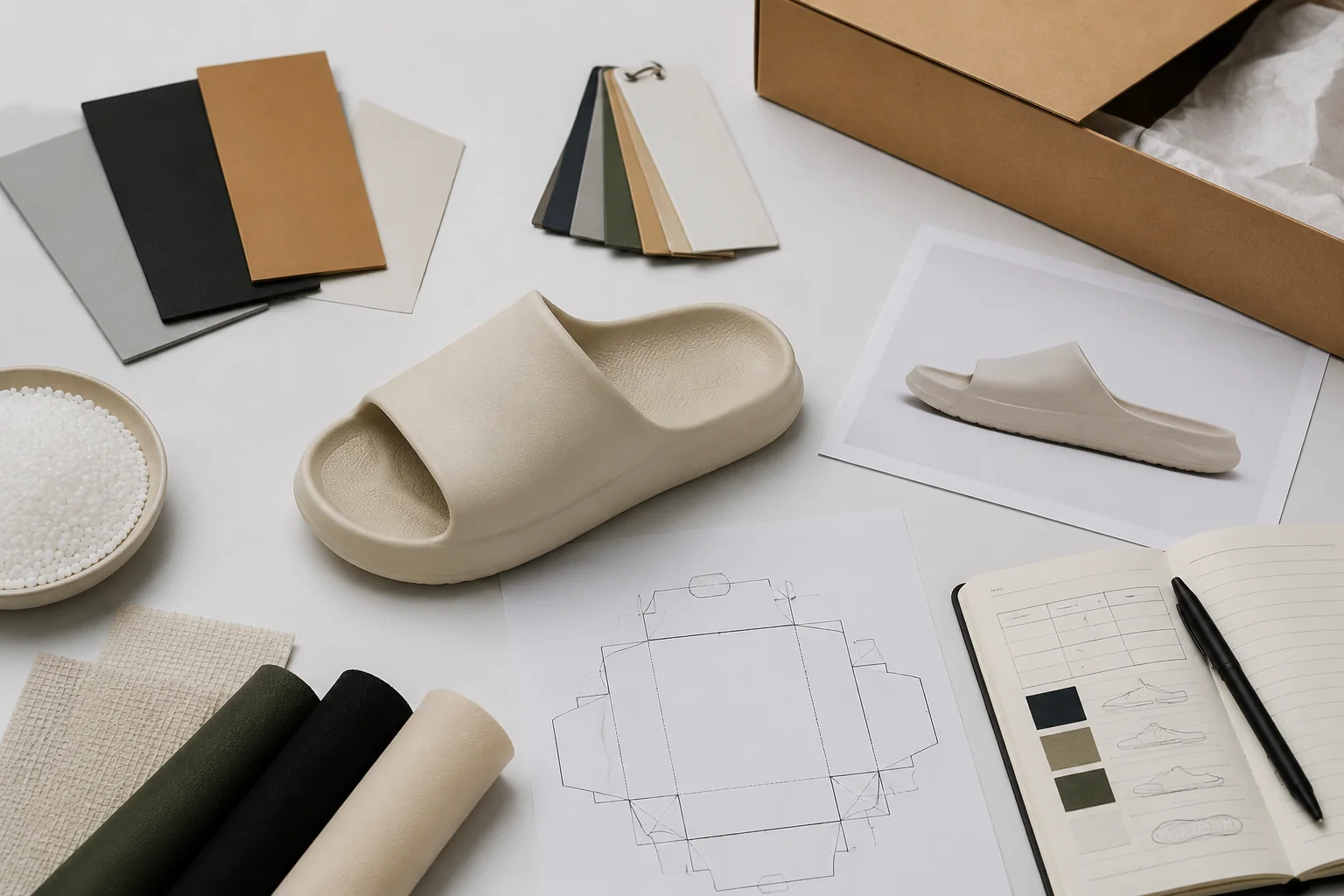
A request for private label slides identifies a product category, but it does not show whether the slides are intended for a retail launch, resort guests, a promotional campaign, an outdoor range, a wellness setting, or a footwear-brand program. That context changes which product priorities and packing questions belong in the discussion.
SandalForge organizes its industries information around six buyer types: retail and ecommerce, hospitality and resorts, promotional and gifting, travel and outdoor, spa and wellness, and footwear-brand OEM. Buyers can use those categories to give a slide inquiry a clear commercial setting before asking which material, sampling, MOQ, packing, and quotation information applies.
Send the Available Project Facts First
SandalForge asks buyers seeking to turn a brief into a quote to send a photo, a quantity, and the market. Those three inputs form the documented starting point.
- Photo
- Attach the available product reference and point out the features that matter to the request.
- Quantity
- State the quantity being considered without assuming that a particular MOQ applies.
- Market
- Identify the market for the proposed product.
As an editorial recommendation, add the primary buyer context, intended sales or use channel, product priorities, known material preference, and packing questions. These additions help organize the inquiry; they are not presented as SandalForge requirements.
The commercial questions can then be listed separately:
- Which sampling information applies to the proposed style?
- Which MOQ information applies to the project?
- What is needed to establish the quotation scope?
- Which material options are relevant to the intended use?
- Which packing details need to be confirmed?
The buyer-context priorities below are documented by SandalForge. Suggestions about what to put in the brief are editorial recommendations, while material suitability and commercial terms remain project-specific inquiry topics.
Match the Brief to the Buyer Context
| Buyer context | Priority identified by SandalForge | Editorial recommendation for the brief |
|---|---|---|
| Retail and ecommerce | On-brand color and packaging | Identify the selling channel and whether the program is a private-label basic or a seasonal color drop. Include the visual direction and packing questions. |
| Hospitality and resorts | Consistent comfort and a clean look | Name the intended setting, such as guest use, pool use, spa use, or gift-shop retail. |
| Promotional and gifting | Low cost, a clear logo, and fast timing | Describe the campaign purpose, attach the available logo reference, and state any timing requirement for discussion. |
| Travel and outdoor | Grip and quick drying | Explain the expected use conditions and identify the performance priorities to review. |
| Spa and wellness | Soft footbeds and neutral colors | Clarify whether the slides are intended for guest use or wellness retail and provide the preferred color direction. |
| Footwear-brand OEM | Specification accuracy and repeatable bulk production | Include the available tech pack and mark any specifications or questions that require review. |
If a project touches two contexts, identify the primary one and describe the secondary requirement. SandalForge says one order can often cover two buyer contexts, but whether that applies must be confirmed for the particular project.
For Retail, Define the Type of Program
SandalForge lists private-label basics and seasonal color drops for retail and ecommerce buyers. Stating which route applies gives the product reference a more useful frame.
For a basics program, the buyer can record the target customer, selling channel, color direction, brand references, and intended packaging presentation. For a seasonal drop, the brief can include the launch context, proposed palette, and any planning date that needs to be discussed. A date in the brief communicates the buyer's requirement; it does not establish a production or delivery commitment.
This distinction also makes a custom slides quote request easier to interpret. For example, a buyer might describe a request as a seasonal ecommerce drop based on an attached slide photo. That wording connects the reference to the sales program while leaving the material, packing, sampling, MOQ, and quotation details open.
Assess EVA Against the Program
SandalForge describes its EVA slides as one-piece molded, light, wipe-clean, and fast to sample. It calls the product a workhorse for basics and promotional programs. The company's materials overview also describes EVA foam as cushioned and lists EVA slides, spa pairs, and promotional products among its uses.
These statements establish private label EVA slides as one documented product direction. They do not establish EVA as the appropriate choice for every slide program.
As an editorial recommendation, buyers considering EVA should identify which documented attributes matter to the project and add any other use or appearance priorities they want reviewed. These might include footbed feel, grip, color direction, intended packing presentation, or features visible in the reference photo. The brief should present them as buyer priorities rather than confirmed properties of the proposed product.
A concise request could state: “We are considering a one-piece EVA slide because a light, wipe-clean product fits the program. Please confirm which material information applies to the attached reference and intended channel.” Buyers can also review the custom sandal range before choosing an initial product direction.
Connect Packing Questions to the Channel
SandalForge associates retail and ecommerce programs with on-brand packaging. In its promotional and gifting category, the company describes logo EVA slides for events and giveaways as bulk-packed to hold the cost down. These examples belong to different buyer contexts and do not set one packing format for every order.
For a retail inquiry, the buyer can identify whether the slides are intended for a shelf or a direct-to-consumer channel and ask which packing information is needed. A promotional buyer can state whether individual presentation is part of the concept or whether bulk packing can be considered. A hospitality buyer can name the guest-use or retail setting and leave the available packing formats for confirmation.
Keeping the channel and packing question together helps explain why the product is being packed, not only how the buyer initially imagines it.
Use Worked Examples Carefully
SandalForge's project formats are identified by the company as worked examples rather than real client stories. They illustrate how a brief may move from a photo to sampling and quotation discussions, but they are not evidence of completed customer orders, commercial terms, or production results.
A buyer can use the closest example as a prompt for organizing information, then submit the facts from the actual project. The relevant inputs still need to come from the buyer's own reference, quantity, market, program, and priorities.
Prepare the Inquiry
- Attach the available product photo.
- State the quantity under consideration and the market.
- Name the primary buyer context and intended program.
- Describe the sales or use channel.
- List the known product direction and buyer priorities.
- For footwear-brand OEM inquiries, include the available tech pack because SandalForge says it builds to the buyer's tech pack.
- Add any packing requirements or questions that need to be discussed.
- Ask which sampling, MOQ, material, packing, and quotation information applies to the project.
Submit the available details through the project inquiry form. A structured brief gives the proposed private label slide program a clear context while leaving project-specific material and commercial decisions for confirmation.
Sources and verification
- Industries We Supply - Sandals by Buyer Type First-party site source
- Custom Sandals for Private Label and Bulk Supply First-party site source
- Sandal Materials & Specs: EVA, PU, Rubber, Leather, Cork First-party site source
- Case Studies - Example Sandal Project Formats First-party site source
Submit a sandal brief and ask which sampling, MOQ and quotation information applies to the project.
Send your project brief