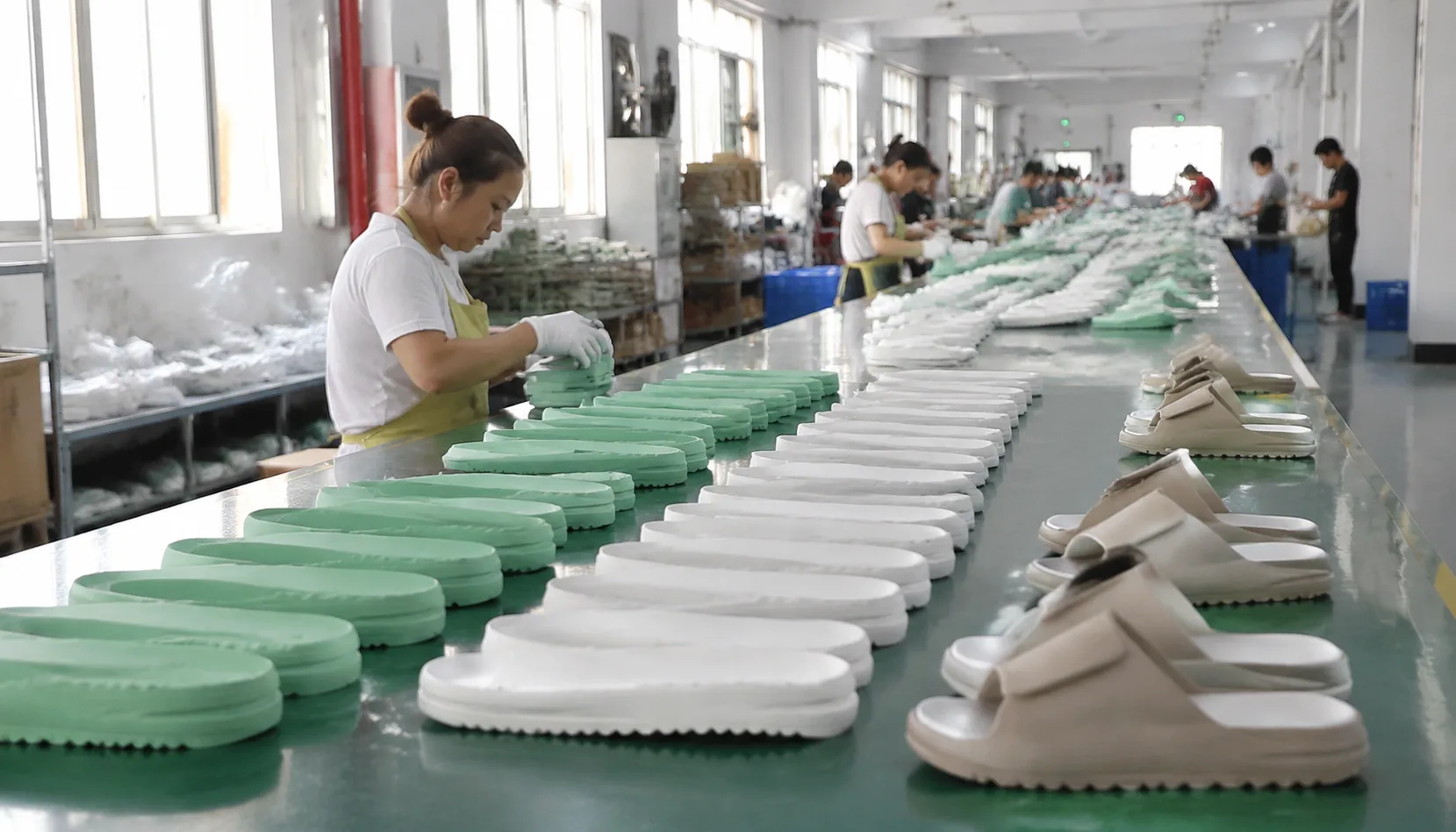
The Sandal Sampling Process, Start to Sign-Off
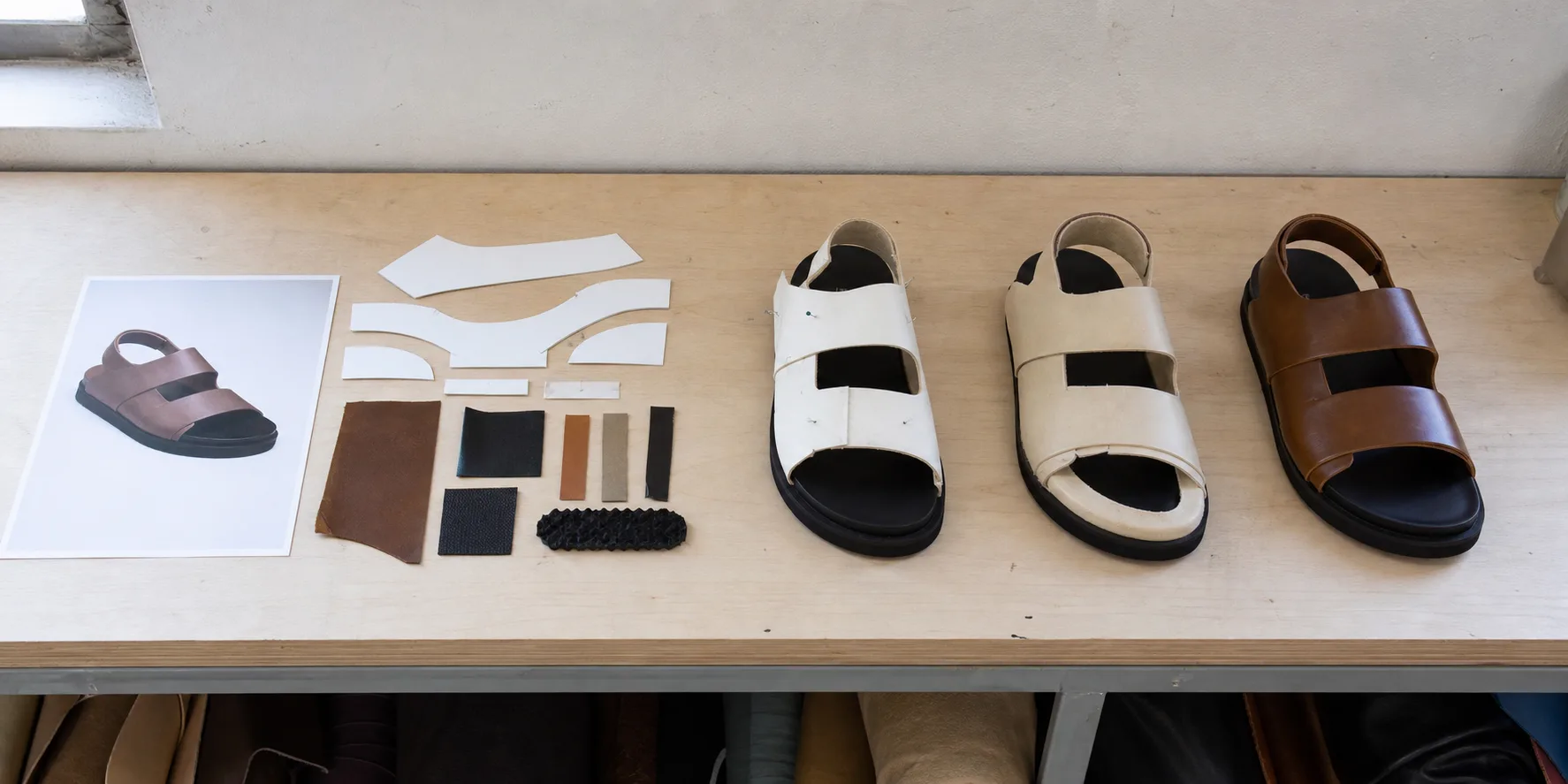
Sampling is the step that decides whether bulk lands right or drifts. Here is how a sandal moves from a reference photo to an approved sample, what you send, what we cut, what to check, and why skipping it is the most expensive shortcut in sourcing.
What you send first
The fastest start is a reference photo or link, a target quantity, and the market it ships to. Add a target price if you have one and any branding direction. We do not need a full tech pack for a first sample - a clear photo and a quantity is enough to identify the construction, propose materials, and cut a development sample. The more specific the brief, the fewer sample rounds.
What we cut
From the brief we propose a construction and materials, then cut a development sample in 7-10 days. That sample is built to confirm shape, footbed feel, strap material, and logo placement - not final production quality, which comes at bulk. If the first sample is close but a detail is off, a revision round tightens it before we commit to bulk tooling.
What to check on the sample
Wear-test the sample if you can. Check the fit against your size run, the footbed density (too soft collapses, too firm feels cheap), the strap feel against bare skin, and the logo method against your brand. Photograph anything that is off and send notes - specific feedback (which strap, how much, in what direction) gets a clean revision far faster than a vague reaction.
Why sign-off matters
The approved sample becomes the reference bulk is built and inspected against. Sign it off and the production run has a clear target; skip it and bulk drifts from your intent with no easy way to prove it. This is why we treat sample approval as a gate, not a formality - it is the cheapest point in the whole process to fix a problem.
Create a sample approval record that production can repeat
Comments scattered across chat messages are easy to lose. Consolidate every revision into one approval record containing the style code, sample version, material callouts, colors, dimensions, size, pair weight, logo placement, packaging, photographs, and open deviations. Mark each point as approved, revise, or accepted for sample only. If a substitute material was used because the bulk component was unavailable, record the difference and require a confirmation swatch before production. Both buyer and factory should keep a signed physical pair or sealed reference. The bulk team can then compare incoming materials, first-off production, and final inspection samples against the same standard instead of interpreting an old photograph or incomplete message thread.
- Style code and sample version
- Materials, colors, and measurements
- Approved deviations and open actions
- Logo and packaging references
- Signed physical confirmation pair