Branding a Sandal: Logo Methods Compared
A logo on a sandal can look premium or cheap depending entirely on the method and placement. Here are the four ways we brand sandals, where each works best, what each costs, and how to pick the one that fits your buyer.
The four methods
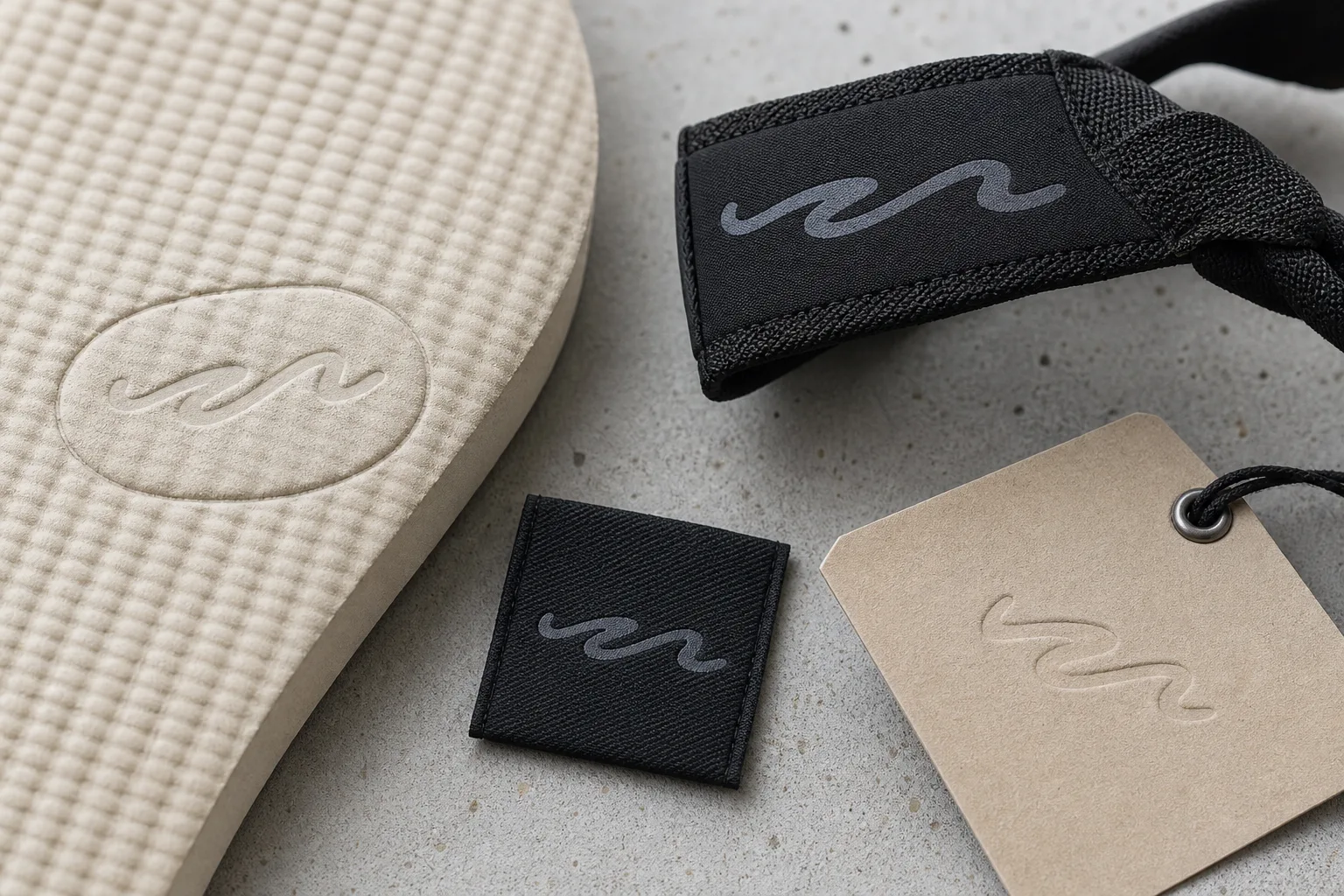
Emboss presses a recessed logo into the footbed or strap for a tone-on-tone, no-ink mark - subtle and premium. Print applies ink to the strap or footbed for full color, best for bold logos. Woven label sews a small fabric label onto the strap, common for heritage and fashion brands. Hangtag attaches a cardboard tag for retail, added at packing rather than production.
Where each works
Emboss suits EVA footbeds and premium leather, where the mark should be felt more than seen. Print works on flat strap surfaces and is the default for promotional logos. Woven labels fit leather and textile straps where a fashion brand wants a stitched identity. Hangtags are a retail-channel add, not part of the build, and work for any style sold on a shelf.
Cost and durability
Emboss needs a die but runs cheap once tooled, and it never wears off because it is pressed into the material. Print has low setup but can scuff over time on high-contact areas. Woven labels carry a per-pair cost plus sewing time. Hangtags are cheap per unit but only apply to retail-packed pairs. Durability ranks emboss highest, woven second, print third under heavy wear.
How to choose
Match the method to the buyer and the price point. Premium and hospitality: emboss for discretion. Promo and basics: print for clarity and cost. Fashion and heritage: woven label for identity. Retail shelf: hangtag plus whatever is on the product. Send your logo file and the buyer type, and we will recommend the method that reads right and holds up.
Control the logo master and production limits
Approve more than a visual mockup. The production file should identify the exact artwork version, logo dimensions, placement coordinates, color reference, minimum line thickness, and acceptable shift. Embossed or debossed marks need tooling depth and edge rules; screen or pad prints need ink, curing, and adhesion standards; woven labels need thread colors, fold construction, and stitch position. Test the method on the actual upper or footbed material because texture, plasticizer, flexing, and surface treatment can change the result. Keep a signed sample and a close-up approval photo at production scale. That gives operators and inspectors an objective reference and stops small logo drift from spreading through thousands of pairs.
- Vector artwork version
- Production size and placement
- Color and minimum-line standard
- Adhesion, flex, or abrasion test
- Signed production-scale logo sample