Sandal QC: What an AQL Inspection Checks
AQL is the inspection standard that decides whether a carton of sandals ships or gets held. Here is what actually gets pulled and measured before cartons close, and why a real inspection protects your shipment better than a promise of quality.
What AQL means
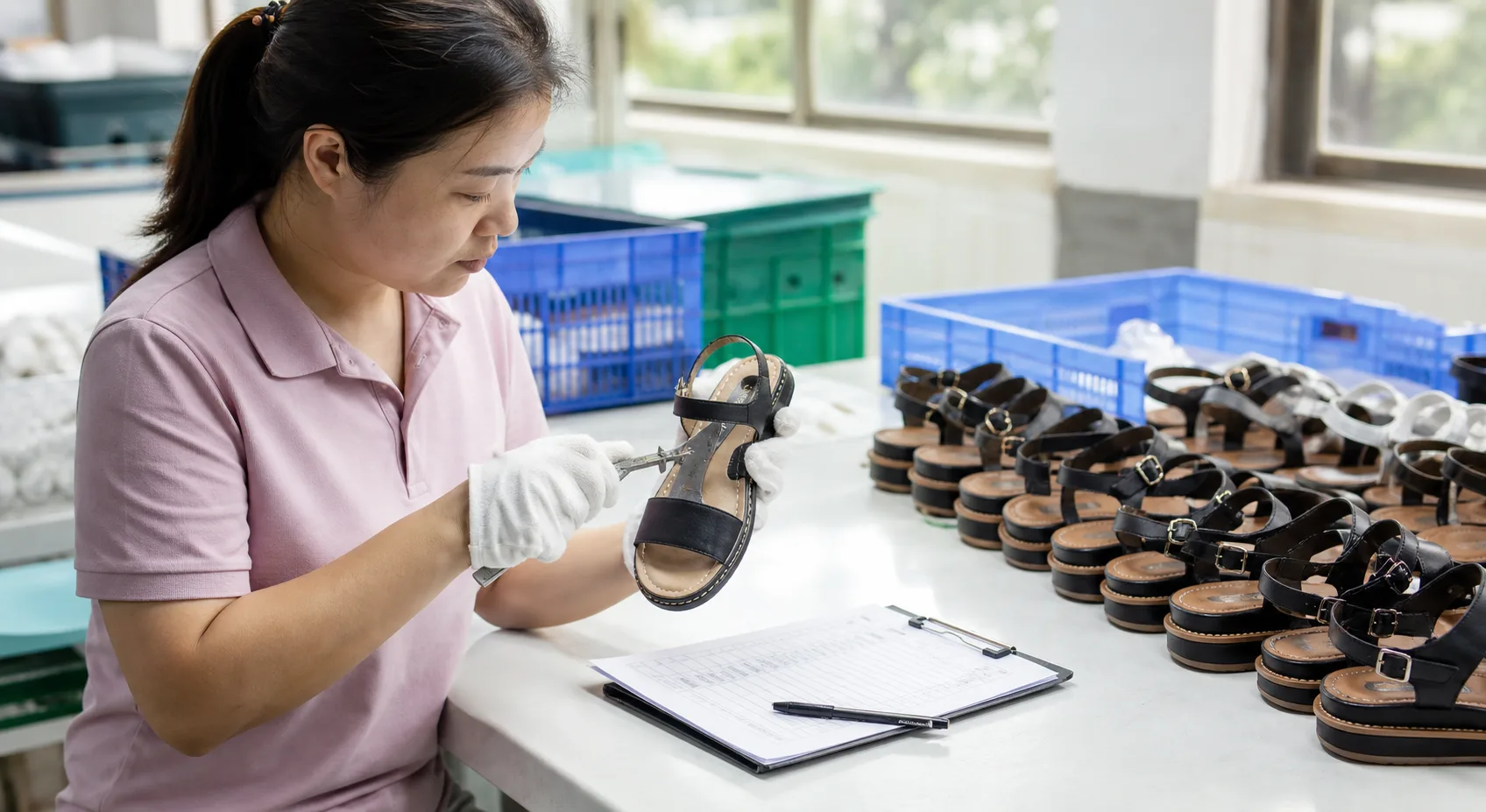
AQL stands for Acceptable Quality Limit. It is a statistical sampling standard: instead of checking every pair, an inspector pulls a set number from the batch based on the order size, then measures defects against an agreed tolerance. AQL 2.5 is the common level for general consumer goods, meaning minor defects are tolerated up to a threshold and major defects are not.
What gets checked on a sandal
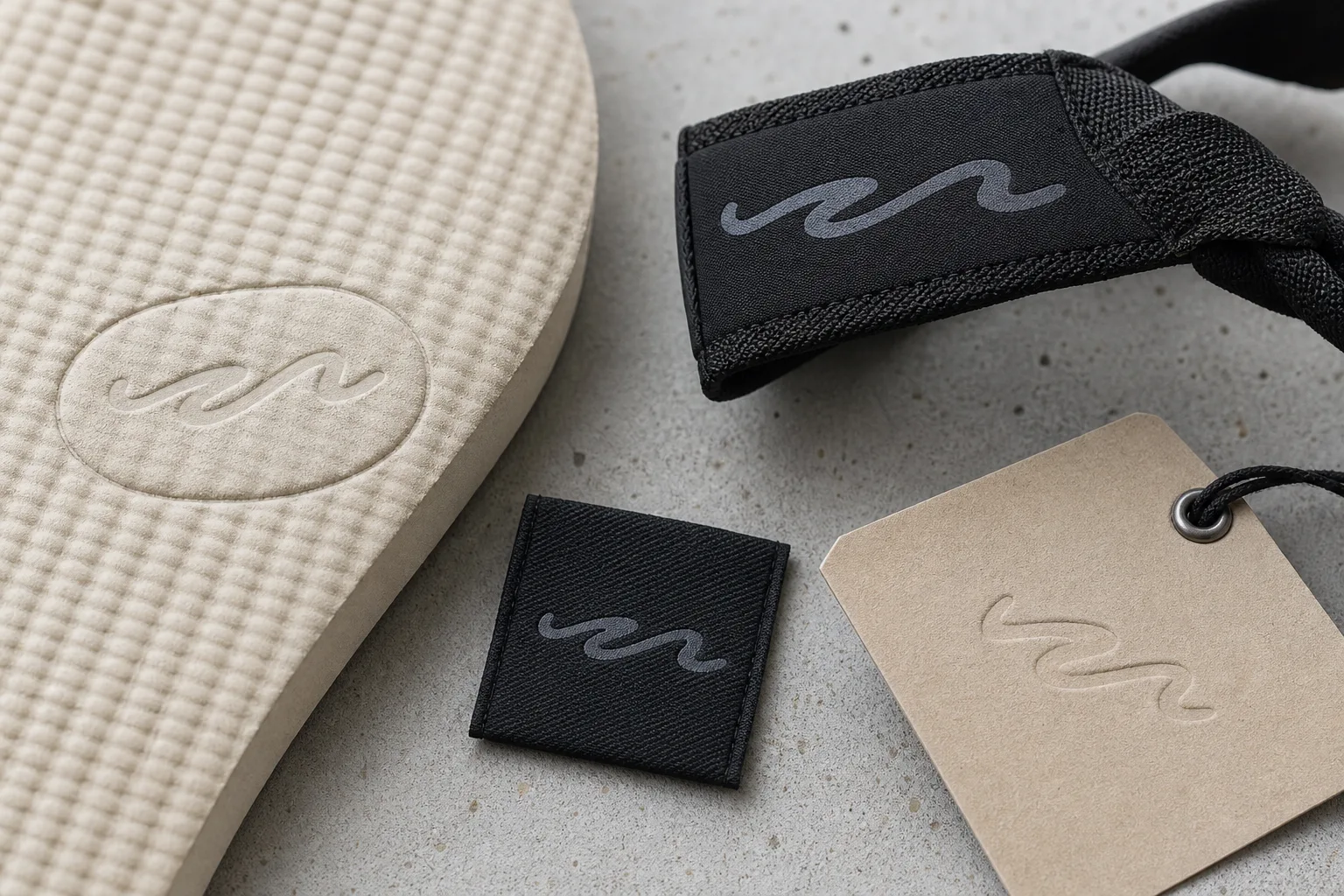
A pre-shipment pull on sandals typically checks four things. Sizing: each pulled pair is measured against the spec last so the run has not drifted. Strap pull: the strap-to-sole bond is tested so straps do not separate in wear. Sole bond: the outsole attachment is checked for gaps and weak adhesion. Print and finish: logo emboss, print registration, and surface defects are inspected against the approved sample.
Why it protects you
An inspection catches drift before it becomes a container of returns. If a size has crept large, or a batch of outsoles bonded weakly, the pull finds it while the order is still in the factory - not when it lands in your warehouse. That is the difference between a correction conversation and a write-off. A factory that runs the check honestly is one you can scale with.
What to ask for
Ask for the inspection level (AQL 2.5 is standard), what gets checked, and whether you can see the records. On larger or first orders, ask for in-progress photos during the run, not just a final report. We do not publish certificates we cannot show, but checkpoint records and photos are available on request - especially for brand OEM and repeat programs.
Define critical, major, and minor defects before inspection
An AQL result is only useful when both sides agree how defects are classified. Safety risks, sharp edges, broken hardware, incorrect labeling, or severe size errors may be critical. Open bonds, loose straps, wrong materials, color mismatches, and failed function tests are usually major because they affect saleability or use. Small cosmetic marks may be minor when they do not change performance or presentation. Add photographs and measurable tolerances to the inspection sheet instead of relying on general phrases such as good quality. Also define the sample size, acceptance limits, carton-selection method, and required tests. With those rules agreed before production, the final inspection becomes a decision tool rather than a last-minute argument.
- Defect class with photo examples
- Measurement and color tolerances
- Sample size and acceptance numbers
- Carton and size sampling method
- Required function and packaging tests